How much seed overseeding takes
Seed (lb) = lawn area ÷ 1,000 × overseeding rate
The overseeding rate is usually about half the new-lawn rate for the same grass. The calculator fills in the middle of the typical range; replace it with the rate on your seed bag.
| Grass | Overseeding, lb per 1,000 sq ft | New lawn, for comparison |
|---|---|---|
| Tall fescue | 3–4 | 6–8 |
| Kentucky bluegrass | 1–1.5 | 2–3 |
| Perennial ryegrass | 3–4 | 5–8 |
| Fine fescue | 1.5–2.5 | 3–5 |
| Sun and shade mix | 2–3 | 4–6 |
| Bermudagrass, hulled | 0.5–1 | 1–2 |
| Zoysiagrass | 0.5–1 | 1–2 |
Worked example
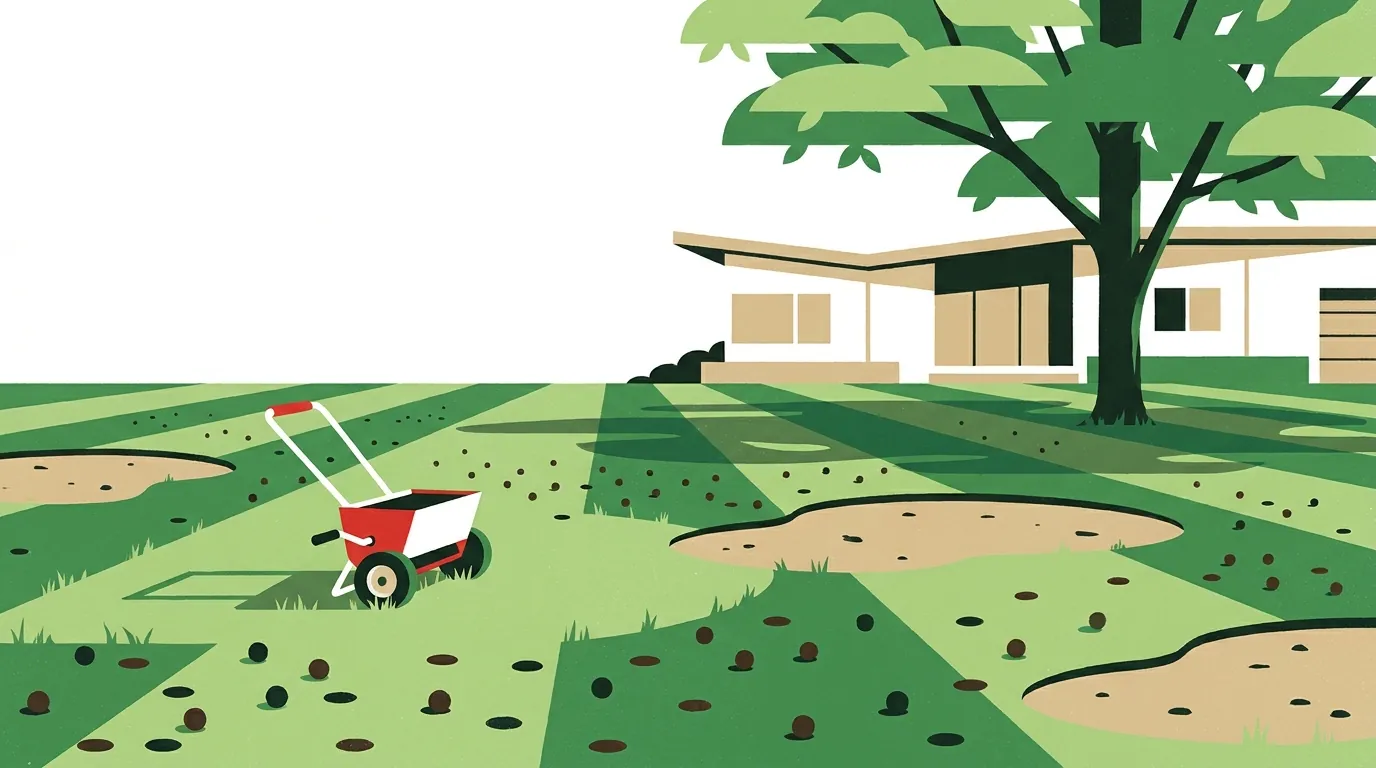
A 60 × 50 ft backyard of tall fescue, thin under a maple and patchy along the fence, with two bare spots of about 40 sq ft each.
- Thin lawn: 3,000 − 80 = 2,920 sq ft at 3.5 lb per 1,000 → 2.92 × 3.5 = 10.2 lb
- Bare spots: 80 sq ft at the new-lawn rate of 7 lb per 1,000 → 0.08 × 7 = 0.56 lb
- Total: about 10.8 lb. Two 7 lb bags (14 lb) or one 20 lb bag, with seed to spare for touch-ups.
In the calculator you can do this as two runs, or enter the bare spots as their own section and bump the rate for that run.
Steps that make overseeding work
The amount of seed matters less than getting it into the soil and keeping it damp. A typical fall overseeding of a cool-season lawn goes like this:
- Mow low. Cut a notch or two shorter than usual and bag the clippings so seed can reach the soil.
- Open up the soil. Core aerate, dethatch or rake hard. Seed sitting on a thick mat of thatch rarely makes it.
- Spread the seed at the overseeding rate, half in one direction and half across it. Put extra on bare spots.
- Feed it. A starter fertilizer at seeding helps new roots. See the lawn fertilizer calculator for pounds of product.
- Water lightly and often until the new grass is up, usually one or two short waterings a day so the top inch of soil never dries out, then water deeper and less often.
- Hold off on weed control. Many pre-emergent herbicides stop grass seed from germinating too. Read the label for how long to wait before or after seeding.
- Mow once the new grass reaches mowing height, with a sharp blade.
How often to overseed
A lawn that thins every year usually has a cause: too much shade for the grass, compacted soil, heavy traffic, or disease. Overseeding with a better-suited grass (fine fescue in shade, a tougher tall fescue in a play area) fixes the symptom and part of the cause. Many cool-season lawns are overseeded every fall or every other fall to keep them dense.
Overseed, reseed or resod?
| Lawn condition | Usual fix |
|---|---|
| Thin but mostly grass | Overseed at about half the new-lawn rate |
| Bare patches under a few square feet | Patch with seed at the new-lawn rate |
| More than about half bare or weeds | Start over: kill, prepare and seed at the full rate, or lay sod |
| Need it green fast, or on a slope | Sod. The sod calculator works out rolls and pallets |
Overseeding rates are typical ranges. The rate on your seed bag comes first, and local timing advice from your extension office is worth checking before you start.
Questions people ask
- How much grass seed do I need to overseed?
- About half the new-lawn rate. For tall fescue that is roughly 3 to 4 lb per 1,000 sq ft, for Kentucky bluegrass 1 to 1.5 lb, and for perennial ryegrass 3 to 4 lb. Your seed bag will give its own overseeding rate.
- What is the best time to overseed?
- For cool-season lawns (fescue, bluegrass, ryegrass), late summer to early fall, when the soil is still warm and weeds are slowing down. Warm-season lawns are rarely overseeded with their own grass; if you do, late spring to early summer.
- Do I need to aerate before overseeding?
- It helps a lot. Seed that lands in aeration holes or on scratched-up soil sprouts far better than seed sitting on thatch. Core aeration, dethatching or a slit seeder all improve seed-to-soil contact.
- Should I use more seed on bare patches?
- Yes. Treat true bare spots as new lawn and seed them at the full new-lawn rate. Use the overseeding rate only where grass is thin but still there.
- What about overseeding Bermuda with ryegrass for winter?
- That is a different job: covering a dormant warm-season lawn with temporary green. It uses perennial or annual ryegrass at higher rates than normal overseeding. Follow the seed bag's winter overseeding rate.